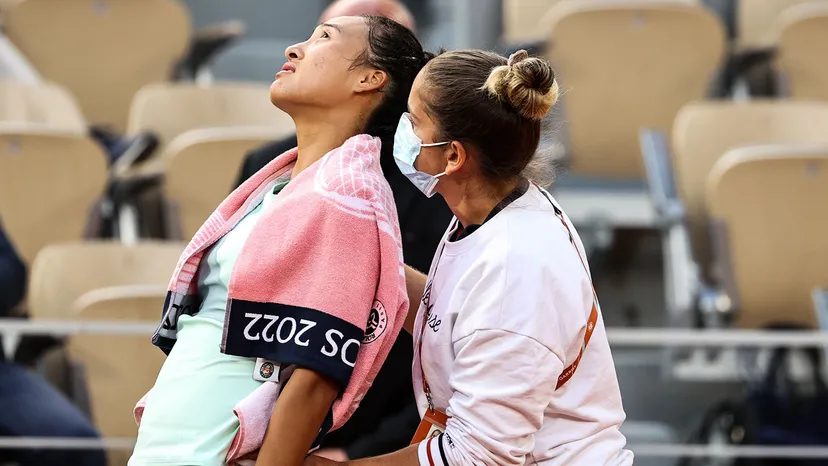
Zheng Qinwen was winning. The French Open, May 2022. She had just dropped the first set against Iga Swiatek, the world number one. The momentum was hers. Then she stopped.
It wasn’t a strategic pause. It was pain.
Zheng needed a medical timeout. She returned to the court, but the spell was broken. Her play suffered. The match ended. The reason? Menstrual cramps.
“I cannot play tennis,” she told reporters. “It’s a girls’ thing… I wish I could be a man on court, but I cannot … I really wish I can be a man so that I don’t have to suffer from this.”
That quote went viral. Not just among tennis fans. It hit a nerve in offices everywhere. We talk about burnout. We talk about flexibility. We rarely talk about the biological reality of having a uterus while trying to meet deadlines.
How menstrual leave policies change the work dynamic
For Zheng, and for anyone with severe cramps, menstrual leave isn’t a luxury. It’s a necessity.
Currently, most women dip into sick days or vacation time to manage period pain. That eats into benefits we’ve earned. Companies that offer specific menstrual leave are pushing back against that. They are acknowledging that menstruation is a biological function, not a personal failing.
Sonya Passi, CEO of the LA-based app company Chani, put it bluntly to The Washington Post. “It’s incredibly painful to have a uterus, and yet, from a young age, we’re taught to push through this pain and keep working.”
Chani offers unlimited menstrual leave for people with uteruses. It makes sense. Women make up 40 percent of the global workforce. About 20 percent of them deal with dysmenorrhea—extreme pain that can be debilitating.
Cicinia, a UK fashion brand focused on wedding dresses, tried it. They gave female employees at least one day a month to rest if they’re in pain.
Jean Chen, co-founder and COO of Cicinia, says the move boosted productivity. Not because people were slacking. Because they felt cared for. “This small step… increased their productivity,” Chen says. “They also feel cared for by the company. That’s why they become more committed to what they do.”
It’s a simple equation. Rest leads to better work. Pain leads to distraction.
Where does the world stand on period leave?
You might think this is new. It isn’t. But it is rare in the places where you’d expect it.
The US has nothing. Japan has allowed unpaid menstrual leave by law for 70 years. South Korea offers leave during periods. Taiwan grants three days a year, on top of sick leave. In Zambia, women can legally sue employers who deny a monthly day off.
India has private enterprises offering it, though it’s not federal law. Spain is on the verge of becoming the first European country to grant paid menstrual leave. Russia had some sectors offering it since 1922, though its current status is murky.
The gap between the Global North and other regions is stark. In the US, you’re on your own.
Why some leaders fear menstrual leave
Not everyone is on board. Critics argue that menstrual leave policies reinforce sexist stereotypes. They worry it paints women as fragile. Or moody. Or less capable.
Juan Dominguez, CEO of The Dominguez Firm in LA, admits his view leans on old tropes. “It is common knowledge that when women are suffering from menstruation … it is always better to allow your female employees once in a while to avail of this leave than suffer their mood swings,” he says.
He frames it as protecting the team from her “mood swings.” It’s a tired narrative. The idea that period pain makes a woman a “grumpy monster” is a stereotype, not a medical fact.
Alex Smith, CEO of e-commerce firm Luckybobbleheads, is weighing whether to implement the policy. He’s worried about the hiring bias.
“Menstrual leave… will almost certainly mean that women face more obstacles because employers will be even less likely to hire them,” Smith says.
His point is that it conflates severe pain with normal menstruation. Only a minority experience debilitating cramps. Smith argues that labeling all periods as a potential work disruption “othering” of women. It suggests they are delicate flowers. Incapable.
“[Menstrual leave] unnecessarily associates menstrual pain with womanhood and paints all periods with the same brush when, in reality, only a small percentage of menstruating people experience such severe cramps,” Smith says.
He’s right that the stereotype is dangerous. But he’s missing the point of the policy. It’s not about every period. It’s about the ones that break you.
For Cicinia, the results speak for themselves. The employees who took the leave didn’t become liabilities. They became more committed. The pain didn’t define their competence. It defined their need for an hour. Or a day.
We’re still figuring out how to balance biology with capitalism. Some companies are leading. Others are terrified. The rest are waiting to see what happens next.
Why menstrual leave actually boosts retention
Chen sees the data clearly. Period leave didn’t just open a door. It built transparency. Employees felt seen. That visibility drove confidence up. Retention followed.
It helps recruit women too. They know the culture supports them.
The hidden cost of period poverty
There is a heavier side to this conversation. Missing work because of cramps is one problem. Not being able to afford the products to manage that period is another.
We call it period poverty.
Globally, 3.5 billion women menstruate. Nearly 25 percent of them—more than 500 million people—lack reliable access to pads or tampons. Cost is the main culprit.
Look at the lifetime toll.
If you stick with tampons, you will spend over $1,700 in your life. Switch to pads? That number jumps to nearly $5,000.
That is not just an inconvenience. It is a financial burden that shapes daily choices.
“Employee retention increased. It actually helps in recruiting women.”
The math is stark. The impact is even starker.