You see the sun. You feel the warmth. You decide that a little color is exactly what you need right now.
It’s a ritual as old as summer itself. We chase that “California girl” bronze glow to the pool, the beach, or the tanning salon. We want that healthy look. The truth is harsher. That glow isn’t health. It’s damage.
There is no such thing as a healthy tan.
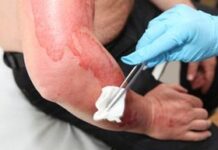
Tanning is simply your skin’s panic response. It’s producing melanin to shield itself from ultraviolet (UV) assault. But the shield is a lie. Every ray that hits your skin causes harm. The severity depends on duration. One afternoon can lead to redness. A full day can lead to blistering.
Beyond the burn, there’s heatstroke. Your body’s thermostat fails. You get dizzy. You faint. Your breathing gets shallow. That’s not a beach day. That’s a medical emergency.
Long-term? The damage accumulates. Wrinkles. Sunspots. Skin that feels like leather. Premature aging. And the big one. Skin cancer.
In 2008 alone, over 1 million non-melanoma cases and 60,000 melanoma cases were diagnosed in the US. The American Cancer Society has the numbers. The science is clear. Yet we still hunt for the perfect tan.
We tell ourselves stories to justify the risk. Let’s bust the biggest myths.
Tanning Beds Are a Safe Alternative
Let’s be blunt. Tanning beds are not safe. Health experts agree. Skin experts agree. The US Department of Health and Human Services classifies sunlamp exposure as a known human carcinogen. Risk increases with time. Risk skyrockets if you are under 30.
Many states are moving to ban tanning salons for minors. Why? Because the industry lied.
A few years ago, tanning companies claimed their bulbs used more UVA than UVB. They said UVA burns less. They claimed it was safer. The World Health Organization (WHO) shut that down. UVA rays are equally dangerous. They may even be more likely to cause melanoma. The deadliest skin cancer.
Indoor tanning does exactly what outdoor tanning does. It causes wrinkles. It creates sunspots. Teenagers notice new moles. New freckles. These are signs of damage.
And the vitamin D argument? Fake. Most people get enough vitamin D from ordinary, brief sun exposure and a diet including dairy, fish, eggs, and bread. You don’t need to bake yourself to stay healthy.
UVA vs. UVB: What Actually Hurts
Sunlight delivers two types of ultraviolet rays. UVA and UVB.
UVB causes the burn. It’s the immediate sting. The redness.
UVA causes the long-term damage. It penetrates deeper. It breaks down collagen. It leads to aging and cancer. Both are harmful. Neither is safe.
Does Sunscreen Actually Work?
Sunscreen is part of the plan. It is not the whole plan.
Sunscreens work by absorbing, reflecting, or scattering UV rays. You have two main types.
Physical sunscreens use zinc oxide or titanium oxide. They sit on top of the skin. They form a film. They reflect light away.
Chemical sunscreens use ingredients like avobenzone or oxybenzone. They absorb the rays before they hit your skin layers.
Every product has an SPF. Sun Protection Factor. This measures UVB protection only. Higher number equals greater protection.
SPF 15 filters about 93 percent of UVB rays.
SPF 30 filters about 97 percent.
That 4 percent difference sounds small. It matters.
Effectiveness depends on several factors. Your skin type. The intensity of the UV rays. How much you apply. How often you reapply.
Sweat kills effectiveness. Swimming kills it. High humidity reduces it. Showers remove it. Some sunscreens are water-resistant. None are waterproof.
When you pick a bottle, look for broad-spectrum. This means UVA and UVB protection. Check the label. Does it list sunscreen ingredients?
Tanning lotions do not contain sunscreen. Accelerators do not. Oils do not.
If you put those in your beach bag, you are asking for a nasty burn. You are inviting damage.
Researchers say the lifetime risk for an American to develop melanoma has increased approximately 2,000 percent in the past 75 years. The primary driver? The modern quest for the perfect tan.
We are chasing a myth. And paying for it with our health.
How Base Tans and Sunless Products Actually Work
You’re booking a trip to the Caribbean. Naturally, you want that glow. So, you schedule a few sessions in a tanning bed or lounge by the pool before you leave. The logic feels sound: build a base tan so you don’t get burned when you land.
It’s a common mistake.
A base tan offers minimal protection. More importantly, that change in skin color is visible proof of damage. It’s your body’s cry for help in response to ultraviolet (UV) rays. Repeated exposure accelerates premature aging and bumps up your risk for skin cancer.
If you want the look without the damage, skip the UV rays.
Why Self-Tanners Are Safer Than Sunbeds
Sunless tanning products offer a way out. They change the color of your skin without stimulating melanin production or absorbing UV rays.
The key ingredient is dihydroxyacetone (DHA ). This compound stains the dead skin cells in the outer layer. The color lasts until those cells slough off. Vigorous washing or exfoliation will make it fade faster.
“Fake bake” products come in many forms: lotions, sprays, towelettes. You might need to try a few brands to match your skin tone. Salons offer “airbrush tanning,” which usually looks even and natural. With these options, you get the warm hue without the potential for skin damage.
Why Darker Skin Still Needs Protection
Myth: If you have darker skin, you don’t need to worry about sun damage.
Not true.
Skin color depends on melanin in the epidermis. Melanin protects against skin cancer and premature aging. In African-American skin, melanin provides an SPF of roughly 13.4. White skin sits around 3.4. This difference explains why skin cancer is more common in Caucasians.
But melanin isn’t a shield. Olive or darker-toned skins can burn after a long day. They also show signs of damage over time: wrinkles, sunspots, blotchiness.
Skin cancer is also a risk. It accounts for 2–4 percent of all cancers among Chinese and Japanese Asians. It makes up 1–2 percent of malignancies in African-Americans and Asian-Indians. Those numbers are rising.
Melanoma, the deadliest form, occurs in all races. One type, acral lentiginous melanoma (ALM ), is responsible for 50 percent of all melanomas in dark skin.
ALM is a “hidden” melanoma. It develops in places that are hard to examine: palms and soles, under nails, mucous membranes in the mouth and nose. Early on, it looks like a bruise or a nail streak. It’s easy to overlook.
Bob Marley died from melanoma discovered on his foot. By then, it had spread. It was incurable.
Sun Protection Matters More on Cloudy Days
Myth: Cloudy or cold days don’t require sun protection.
If you’ve burned on ski slopes, you know this is false. UV rays are present even when the sky is overcast. People stay outside longer on cloudy days. That false sense of safety leads to painful burns.
Snow, water, and sand reflect 85 percent of the sun’s rays. Skiing, boating, or beach days require sunscreen and frequent reapplication.
Follow a sensible plan whenever you’re outdoors. Apply sunscreen generously. Use about 1 ounce to cover exposed areas. Apply it 30 minutes before heading out. Rub it in well. Reapply at least every two hours.
For even better protection, seek shade between 10 a.m. and 4 p.m. Sunlight is strongest then. Wear light-colored clothing. A wide-brimmed hat helps. Sunglasses that block UV rays protect your eyes.
The result? Younger-looking skin. Healthier skin. Skin that stays attractive for years.
Why Tans Went from Taboo to Trend
Tans weren’t always desirable.
Centuries ago, the upper class looked down on them. Fair, pale skin was beautiful. Tans marked the working class laborer who spent the day outdoors. The wealthy stayed indoors. They kept their skin covered and protected.
Fashion flipped in the 1920s.
Coco Chanel returned from the French Riviera with a deep tan. Suddenly, tans were in vogue. Short skirts, bikinis, and shorts became popular. They revealed more skin. A beautiful tan became a coveted accessory.