Spicy. Creamy. Unapologetic.
Calabrian chiles turn a standard creamy pasta into something with a backbone. This isn’t the shy stuff. It’s bold, it’s bright, and frankly? It’s probably the reason everyone stopped ordering fettuccine alfredo three years ago.
Why the hype
Spicy vodka sauce is everywhere now. You see it in every old-school Italian-American spot from Brooklyn to Chicago, and even in the sleek new places with concrete floors and open kitchens.
Why? Flavor. Real flavor.
The sauce is a swirl of tomatoes, heavy cream, onions, herbs, and—yes—vodka. You might think the alcohol cooks off completely and serves no purpose. Wrong.
Vodka emulsifies the sauce. It bridges the acidic tomatoes and the fatty cream. More importantly, it lifts the fruity notes in the tomato. Without it? Just thick tomato soup. With it? Complexity.
Ratios matter. Do not freestyle this. If you want the heat, the tang, and the rich mouthfeel to harmonize, you need precision. A lot of lazy recipes use only tomato paste. Boring. You need a can of whole peeled San Marzano tomatoes for that sharp acidity. You need Calabrian chiles for the bite. Onions, parsley, and oregano handle the fragrant base.
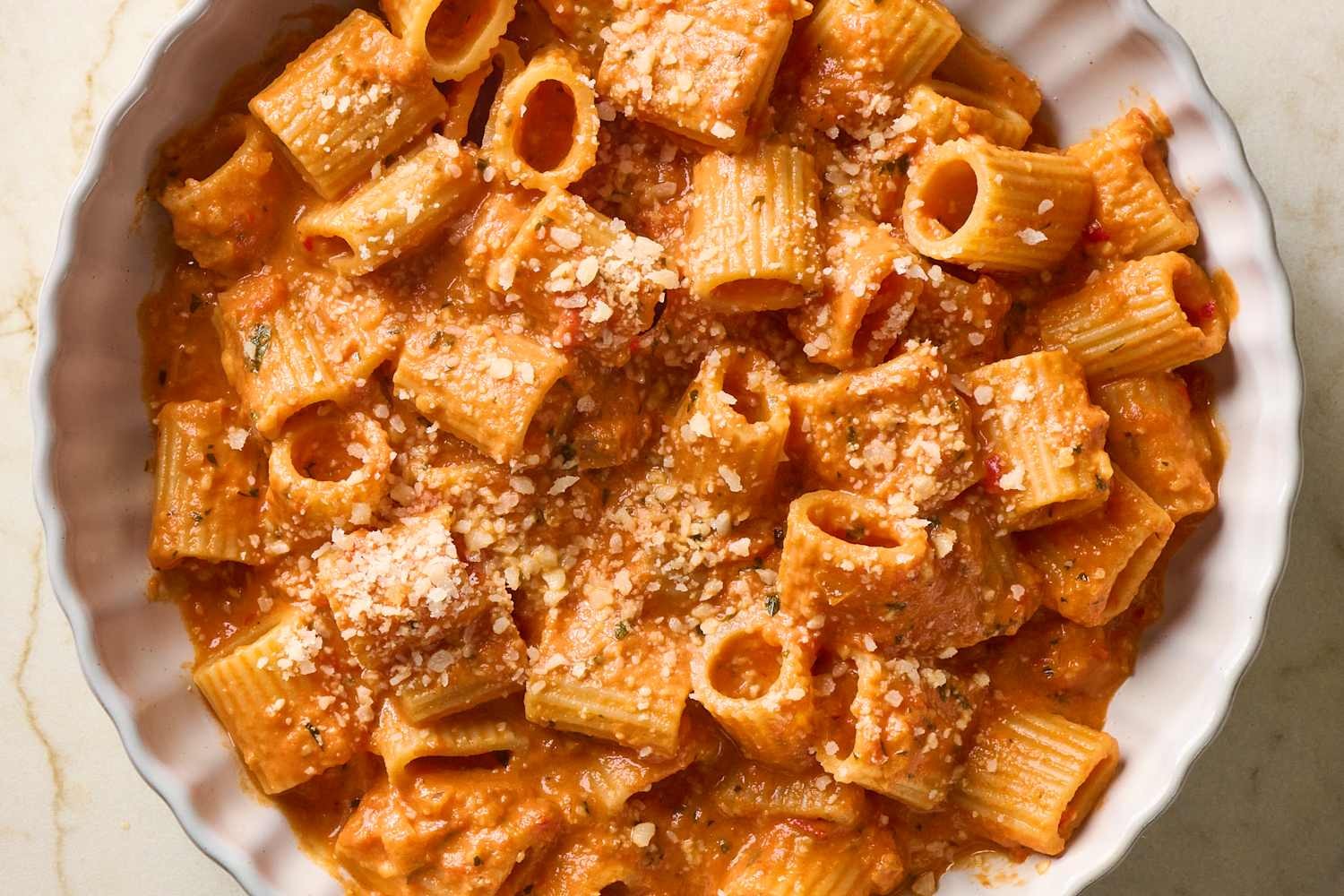
Use rigatoni. Shells work too. Or orecchiette. Honestly, use whatever pasta you like, but the sauce holds onto ridges beautifully.
Trust the tester
Kristina tested this in April 2026. Her verdict? “Definitely a spicy pasta.” She likes heat, so two tablespoons of chopped chiles wasn’t an issue, but she appreciated that the recipe allows for a range. You control the fire. Fresh herbs add brightness that cuts right through the richness.
The ingredients
- Vodka adds that boozy lift. Don’t cheap out here, though you don’t need top shelf. It enhances the tomatoes.
- Calabrian chiles provide a fruity heat that dried peppers can’t touch.
- Tomato paste brings sweetness and body. A full can is key.
- Whole peeled tomatoes offer bright acidity. This is the foil to the heavy cream and cheese.
- Herbs and garlic cooked in butter make the foundation. Fresh parsley and oregano are earthy, bold, and perfect for cutting through tomato acid.
- Heavy cream stabilizes the texture. It cools the heat and turns the sauce that inviting orange.
How to build it
Cook onions in butter in a Dutch oven until golden. Fragrant? Good. Push them to the side. Toss in garlic, parsley, and oregano. Stir. One minute.
Add the chiles. Stir. Push everything to the edge again. Drop the tomato paste in the center. Swirl some water into the empty paste can, pour it in, and scrape the bottom of the pot. Those browned bits are flavor gold.
Dump in the whole peeled tomatoes and their juice. Smash them with a spoon. Add the rest of the water swirled from that can too. Season with salt and pepper. Simmer. Keep it low. Let it cook for thirty minutes.
About twenty minutes before the sauce is done, boil your pasta water. Salt it heavily. Cook the rigatoni al dente.
Want a smooth sauce? Blend it now with an immersion blender. Or don’t. It’s your call.
Add the vodka. Stir. Cook for three minutes so the alcohol mellows and the flavors merge. Turn the heat off. Stir in the heavy cream and grated Parmesan. Let the cheese melt into a velvet emulsion.
The finish
Reserve half a cup of sauce. Toss the cooked pasta directly into the rest. Mix until every ridge is coated. Taste it. Add salt or pepper if it needs it. Serve with extra grated Parmesan on top. Spoon the reserved sauce over the plates if you feel fancy.
Leftovers keep in the fridge for four days in a sealed container.
No need for swaps unless you’re allergic to dairy, in which case, good luck. Otherwise, just cook. It’s fast. It’s direct. It works.