


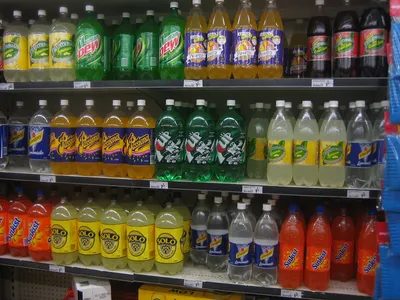
Soft drinks are non-alcoholic drinks. Usually carbonated. They rely on natural or artificial sweeteners. Edible acids provide flavor. Flavors come from plants such as fruits, nuts, roots and herbs. Some also contain juice. Coffee, tea, milk and juice are excluded. It’s not a soft drink.
The term itself indicates the difference. Distinguish these drinks from spirits. Early Americans were encouraged to swap spirits for flavored water. Today, health issues create new categories. Low calorie. Low sodium. Does not contain caffeine. “All natural” ingredients are the new standard.
Specialty drinks and their global origin
Soft drinks vary by region. Mineral water is a staple in Europe and Latin America. In Fiji and other Pacific islands, people drink kava. It is made from the root of Piper methysticum. Cubans love carbonated sugar cane juice. Unrefined syrup gives flavor.
Soy flour drinks are sold in tropical areas. Diets there often lack protein. Carob extract is used in Egypt. In Brazil, yerba mate is the foundation. In North Africa, whey is carbonated from buffalo cheese production. Some Eastern Europeans drink fermented stale bread. In Israel, honey is mixed with orange juice.
The Birth of Carbonation
The first soft drinks appeared on the market in the 17th century. Mix water and lemon juice. Honey for sweetness. In 1676, the Limonadier Company was founded in Paris. They held a monopoly. Vendors carried tanks on their backs. They dispensed cups of lemonade.
Carbonated water arose from European attempts to imitate natural spring water. These springs are famous for their sparkling water. This water was believed to have healing properties. Effervescent character is key.
Jan Baptista van Helmont used the term “gas”. He explained the amount of carbon dioxide. Gabriel Venel calls it “aerated water”. He confused the gas with ordinary air. Joseph Black named it “Fixed Air”.
In 1685 Robert Boyle published “A Short Memoir of the History of Natural Experiments Concerning Mineral Experiments”. He studied mineral water. He analyzed their properties. He studied their effects on the body. He also describes how natural medicinal waters can be imitated artificially.
The Royal Society of London published a report in the late 18th century. Stephen Hales, Joseph Black, David Macbride, William Brownrigg, Henry Cavendish and Thomas Lane all contributed.
Joseph Priestley is known as the father of the soft drink industry. He experimented with gas from the brewery’s fermentation barrels. In 1772 he demonstrated a carbonating apparatus to the London College of Physicians. He suggested using a pump to inject the fixed air more completely into the water. Antoine-Laurent Lavoisier proposed the same in 1773.
Thomas Henry, a Manchester pharmacist, created the first carbonated water. He used a 12-gallon barrels. His apparatus was based on Priestley’s designs. Swiss jeweler Jacob Schweppe read Priestley and Lavoisier’s paper. He created a similar device. In 1794, he sold highly carbonated artificial mineral water in Geneva. Then he started his own business in London.
Bottled water was originally used for medicinal purposes. In 1794 Matthew Boulton wrote to Erasmus Darwin:
J. Schweppe has produced three mineral waters. No.1 is suitable for general drinking during dinner. No. 2 is for kidney patients, and No. 3 contains the most alkali and is used only in severe cases.
By 1820, improvements in manufacturing techniques increased production. Bottled water has become popular. Manufacturers add mineral salts and flavorings. Ginger appeared around 1820. Lemons appeared in the 1830s. Tonic from 1858.
In 1886 John Pemberton invented Coca-Cola. He is a pharmacist in Atlanta, Georgia. It was the first cola drink.

Water quality standards
You don’t drink tap water directly at parties, and the same goes for soft drink manufacturers. Municipal water is safe, but unstable. One month may contain more minerals than the next. Water needs to be purified to get the consistent taste you expect from soda brands.
Keep it simple with a few small plants. The water is passed through a sand filter to recover solids and activated carbon is used to remove the taste and smell of chlorine. However, most large-scale operations are much larger. They use superchlorination. Although it sounds scary, this is normal practice. This water is left for two hours in a tank containing high doses of chlorine and flocculant. This combination kills algae and bacteria. it filters through sand and carbon. The result is sterile and uniform, and you can proceed to the next step.
Carbonation Mechanics
Fizz is the soul of the drink. Carbon dioxide has three functions. It provides the sparkle. It adds the sharp, tangy bite. It acts as a preservative and prevents spoilage before it starts.
Gas enters the plant in two forms. It can also be dry ice. More commonly, it is liquid carbon dioxide under tremendous pressure. in heavy steel tanks, it is 1,200 pounds per square inch. You can use a lighter steel tank in the fridge, but the pressure will still be around 325 psi.
How do you force that gas into the water? You chill it. The cold liquid is then poured in a thin layer onto the plate inside the pressure chamber. Physics takes over here. Cold liquid absorbs more gas. High pressure forces it deeper. The lower the temperature and the higher the pressure, the more bubbles the water holds.
Building the Flavor Profile
The syrup has its own personality. It is a concentrated mixture of sweeteners (sugar or artificial substitutes, an acid for tartness, natural or artificial flavors and sometimes preservatives).
Making syrup is more than just pouring ingredients into a bucket. This is a two-step process.
- Simple syrup: First dissolve sugar in water. If you are unsure about the quality of the sugar, it can be treated with charcoal and filtered to ensure clarity and purity.
- Finished syrup: Then add the acids and flavorings in the exact order. Order is important. You don’t want precipitation. You don’t want separation. You want a stable, homogeneous concentrate.
The Final Assembly

Stir, stir, bottle
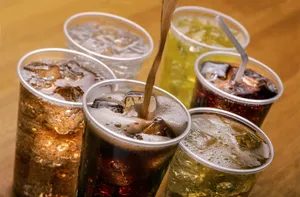
There are two main ways to make your favorite soda. First, take the concentrated syrup, dilute it with water, cool it, add bubbles and bottle it. Or fill the exact amount of syrup directly into the bottle first. Then pour into carbonated water.
Either way, you’re going to be consuming a lot of sugar.
The syrup itself contains 51-60% sugar. By the time it reaches the glass, it has been diluted to 8-13%. That still sounds low, right? However, a standard 12-ounce bottle of soda contains more than 40 grams of total sugar. Lots of sweetness at once.
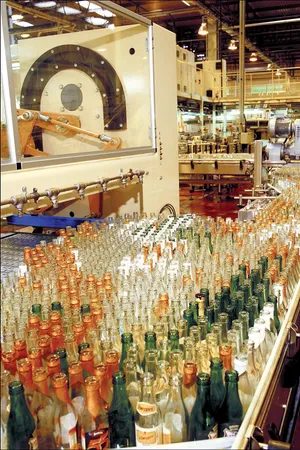
The situation is different on the factory floor. This is almost completely automatic. Mix the syrup with a machine. They wash the bottles. They fill them.
When you return the bottle, we clean it thoroughly. Soak in hot alkaline solution for at least 5 minutes. Then rinse thoroughly. Disposable bottles? Only flush with air or flush with potable water before filling. Filling is very fast. Hundreds of containers per minute.
Pasteurizing Noncarbonated Drinks
Not everything is bubbly. Still drinks require similar ingredients and technology. However, it does not have the same preservative power as carbonic acid. Therefore, additional protection against spoilage is needed.
Usually pasteurized. This can happen in batches. Alternatively, it can be continuously flash pasteurization before filling. Some are pasteurized directly in the bottle.
Powder and ice variants
Powdered soft drinks are simple. They mix aromas with dry acids, gums and artificial colors. Add water if sweetener has been added. Even if it’s cold or carbonated. It’s your choice.
Icy soft drinks have come a long way. The original version was a glass of ice with syrup. Now advanced machines mix precise amounts of syrup and water. Chill the drink to -5 to -2 °C (22 to 28 °F). The result is the soft, slushy texture we are all familiar with.
Packaging and Purchase locations
You can find these drinks everywhere. glass bottle. plastic bottle. Tin-free steel cans. aluminum can. Plastic cans. Treated cardboard box. Foil pouches. Also large stainless steel tanks.
Vending machines started small. Freezers from the beginning of the 20th century. Now electric refrigerators do the heavy lifting for you. Restaurants use dispensing guns to for volume. The bar depends on them.
There are two systems in cup vending.
Premix : The manufacturer makes the drink. Supplied in a 5 or 10 gallon stainless steel container. The machine cools it and sells it.
Postmix : The machine does the work. It has its own water and carbon dioxide supply. Carbonate water on site. Then pour the water into the cup and the water and flavored syrup will mix.
The Health Reality Check
Regularly drinking carbonated drinks is not good.
These risks are associated with added ingredients. Mainly sugar. A 12-ounce serving can contain more than 40 grams of sugar. This exceeds the recommended daily limit for adults.
The American Heart Association has strict restrictions. Women should not eat more than 25 grams of sugar per day. 38 grams for men. Consuming one or two sugary drinks a day significantly increases the risk of metabolic syndrome and type 2 diabetes.
It’s not just diabetes. Both men and women have an increased risk of coronary heart disease and premature death. Every sugary drink you drink increases your risk of dying from cardiovascular disease by about 10%.
Diet soda isn’t a free ticket either. Drinking two or more artificially sweetened diet drinks a day increases a woman’s risk of heart disease and stroke.
Long-term use is associated with weight gain and obesity. Both children and adults. Tooth decay is also a big problem. Diet sodas have also been linked to dental erosion. Damage-causing chemicals such as acidity, sugars and chelates. These can demineralize your teeth.
Regulatory Backlash
Health issues sparked discussion. Should consumption be limited? Should soda be banned? Will taxes go up?
Mexico is a pioneer. In January 2014, the government introduced a national tax on sugar-sweetened soft drinks. Later that year, Berkeley, California became the first city in the United States to pass a sugar-sweetened beverage tax. Voters approved it unanimously.
In 2015, Russia banned caffeinated soft drinks for children in the Vologda region. San Francisco requires health warnings on labels. It’s the same as alcohol and tobacco.
However, many measures have failed.
In 2013, New York City tried to ban extra large sodas. Anything larger than 16 oz. This proposal was rejected in court. The American Beverage Association disputes this. They argued that the city’s board of health exceeded its public health authority.
The war is not over yet. The machine continues to operate. The sugar keeps pouring. The conversation continues.