You’ve seen them. The little numbers staring back at you from every yogurt cup, bag of chips, and bottle of soda. We count them. We cut them. We stress over them. It feels like the only way to navigate the modern food landscape is to treat every bite as a transaction in a currency we’re constantly trying to save. But somewhere between the kale smoothie and the midnight cookie, the word “calorie” just becomes background noise. A buzzword. A barrier.
Have you ever actually stopped to ask what a calorie is?
It’s not a measure of fat. It’s not a measure of goodness or guilt. It’s strictly a unit of energy. Specifically, a calorie (with a lowercase ‘c’) is the amount of heat energy needed to raise the temperature of one gram of water by one degree Celsius. That’s it. Physics. Thermodynamics. No moral judgment attached.
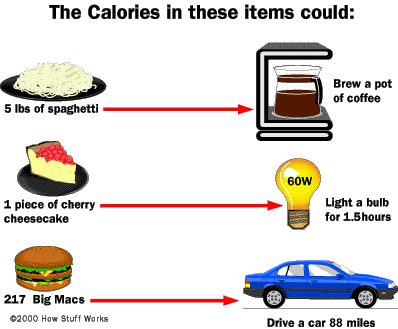
But when we talk about food, we’re usually talking about kilocalories (often just called “calories” on nutrition labels). One kilocalorie equals 1,000 small calories. It’s a tiny bit of energy. Enough to lift a apple one meter off the ground. That’s the power contained in a single calorie.
So why does it matter? Because your body is essentially a furnace. It burns energy just to keep you alive. To pump your blood. To think. To breathe. This is your Basal Metabolic Rate (BMR). You burn calories lying still. You burn more calories when you walk to the mailbox. You burn even more when you sprint for a bus.
The confusion starts when we treat these numbers as static rules rather than dynamic data. A calorie is a calorie, yes. But where that energy comes from changes how your body uses it. A calorie from soda hits your bloodstream differently than a calorie from an avocado. One spikes your blood sugar and leaves you hungry an hour later. The other provides fiber, fat, and steady fuel.
This is where the calorie vs. nutrient density debate usually gets messy. We’re told to limit intake, but we’re rarely told that quality dictates how those calories feel in your body.
A calorie is a unit of energy. How that energy interacts with your biology depends entirely on what food delivers it.
Think of it this way. If you put coal and wood in a fireplace, they both produce heat. But one burns cleaner. One lasts longer. One produces less ash. Your body is the fireplace. The food is the fuel. The number is just the measurement of heat.
The real question isn’t “how many calories?” It’s “what kind of energy?” Because while the math is simple, the biology is deeply personal. Your hormones, your gut bacteria, your stress levels, and your sleep all tweak how that energy is stored or burned.
So the next time you scan a label, don’t just see a number. See a question. What is this food doing to my energy?
Let’s clear up a misconception right away. When you see “calories” on a soda can or an oatmeal packet, you aren’t looking at the scientific definition of the word. You’re looking at kilocalories.
A true calorie is the energy needed to raise one gram of water by one degree Celsius. That’s tiny. A gallon of gasoline holds about 31 million of those tiny calories. So when a fitness tracker tells you burned 100 calories jogging a mile, it actually means 100 kilocalories. For everything we’re discussing here, “calorie” equals “kilocalorie.” It’s just the shorthand we use.
Where the Energy Comes From
Your body is a furnace. It needs fuel to keep your heart beating, your lungs breathing, and your brain firing. That fuel comes from three macronutrients, and they don’t all carry the same energy weight.
Carbohydrates give you 4 calories per gram.
Protein gives you 4 calories per gram.
Fat gives you 9 calories per gram.
That’s why fat is so energy-dense. It’s nearly double the potential energy of carbs or protein.
Take a packet of maple-and-brown-sugar oatmeal. The label says 160 calories. If you could burn that oatmeal completely in a lab, it would release enough heat to raise 160 kilograms of water by one degree. Break it down further, and you see the math. That packet has 32 grams of carbs, 4 grams of protein, and 2 grams of fat.
The carbs provide 128 calories.
The protein provides 16 calories.
The fat provides 18 calories.
Total: 162 calories. The label rounds down to 160, probably to keep things tidy.
Inside your body, this isn’t a fire. It’s chemistry. Enzymes break down carbs into glucose, fats into fatty acids, and proteins into amino acids. These molecules enter your bloodstream. Your cells absorb them. Some are used right away. Others are stored for later. In the final stage, they react with oxygen to release that stored energy. It’s complex, efficient, and entirely automatic.
Why Your Number Isn’t 2,000
You’ve seen it on every nutrition label: “Percent Daily Values based on a 2,000 calorie diet.” Don’t treat that as your personal target. It’s a rough average. Your body might need more. It might need less.
Height, weight, gender, age, and activity level all shift the number. To find your baseline, you need to calculate your Basal Metabolic Rate (BMR).
BMR is the energy your body burns just to exist at rest. It keeps your kidneys filtering blood and your temperature stable. This accounts for 60 to 70 percent of the calories you burn in a day. Men generally have a higher BMR than women, mostly due to muscle mass differences.
If you want a precise estimate, use the Harris-Benedict formula. It’s one of the most accurate methods available.
For adult males:
66 + (6.3 x weight in lbs.) + (12.9 x height in inches) – (6.8 x age in years)
For adult females:
655 + (4.3 x weight in lbs.) + (4.7 x height in inches) – (4.7 x age in years)
Yes, the starting number for women is 655. It sounds arbitrary, but the math checks out.
Your BMR is only half the picture. You also have to add physical activity and the thermic effect of food (the energy used to digest what you eat). But getting the BMR right is the first step. Without it, you’re guessing. And guessing keeps you stuck in the same cycle, wondering why the scale isn’t moving the way you expect.
Does it matter if you’re precise to the single digit? Maybe not. But understanding the machinery helps you stop fighting your biology and start working with it. The rest of the equation—how you move, what you eat, how you recover—depends on this baseline.
Breaking Down Your Daily Energy Equation
Getting a handle on your daily caloric needs isn’t just about staring at a scale. It’s about understanding the machinery under the hood. You’ve already looked at your Basal Metabolic Rate (BMR)—the energy your body burns just to keep you alive. Now, let’s look at the two other engines driving that number: physical activity and the thermic effect of food.
Physical activity is the next biggest calorie burner. We’re not just talking about gym sessions here. Making your bed, lifting groceries, bending over to tie your shoes—all of that counts. The more you move, the more you burn. But here’s the catch: the calories expended depend heavily on your body weight. A heavier person burns more energy moving the same distance than a lighter person. If you want the specific numbers for various activities across different weights, you’ll need to check a detailed chart, as these figures vary significantly by individual mass.
Then there’s the thermic effect of food. This is the energy cost of digesting what you eat. Your body has to work to break food down into usable elements. It’s a simple calculation: take your total daily calorie intake and multiply it by 0.10 (or 10 percent). That’s your body’s “overhead” cost for processing your meals.
To track what you’re actually putting in, resources like the USDA National Nutrient Database, Food Data, or Mike’s Calorie and Fat Gram Chart are reliable starting points. Once you add your BMR, activity burn, and the thermic effect of food together, you have your total daily energy expenditure. If the math feels daunting, rough estimates are available, but knowing the components gives you real control.
The Fat Storage Mechanism
So, what happens when the input doesn’t match the output? Simple physics. If you consume more than you burn, you gain fat. If you burn more than you consume, you lose it.
The body is efficient. It stores excess energy as fat for a rainy day. Specifically, an accumulation of 3,500 extra calories equals roughly one pound of body fat. Conversely, a deficit of 3,500 calories forces your body to tap into those reserves. Whether you achieve this deficit by eating less or moving more, the result is the same: your body converts stored fat into energy.
Exercise plays a trickier role here. It doesn’t just burn calories while you’re on the treadmill. It raises your metabolic rate for a period after you stop. Your body continues to burn calories at an elevated level for about two hours post-workout. This “afterburn” effect means your activity doesn’t end when you wipe the sweat from your brow.
Is a Calorie Really Just a Calorie?
This is the question that sparks the most debate. If we are strictly talking about weight loss, the answer is technically no. A protein calorie is chemically identical in terms of energy to a fat calorie. If you eat exactly what you burn, you maintain your weight. If you burn more than you eat, you lose weight. The source doesn’t change the math of weight fluctuation.
But if we are talking about health, nutrition, and how your body feels, the source matters immensely. Not all calories are created equal in the long run.
Carbohydrates and proteins are generally healthier sources than fats. Yes, your body needs fat to function. It’s necessary for absorbing vitamins and maintaining cellular structure. However, excessive fat intake carries serious health consequences. The U.S. Food and Drug Administration (FDA) recommends that a maximum of 30 percent of your daily calories come from fat. On a standard 2,000-calorie diet, that’s 600 calories from fat, or 67 grams.
Many modern doctors and nutritionists argue for an even stricter limit: 25 percent. For a 2,000-calorie diet, that drops to 56 grams of fat per day. The difference isn’t huge, but over time, it adds up.
The Shocking Truth About Fat Content
We often underestimate how calorie-dense certain foods are. You might think a cup of granola is a light snack. It’s not. It packs 270 calories and 8 grams of fat. Sugar has zero fat, but it still packs 774 calories per cup.
Look at the numbers for some common items:
- Canola Oil: One cup contains 1,674 calories and a staggering 218 grams of fat.
- Peanut Butter: One cup hits 1,520 calories with 129 grams of fat.
- Cheddar Cheese: One cup is 531 calories and 44 grams of fat.
- Chocolate Syrup: One cup is 837 calories with 3 grams of fat.
- Coca-Cola: One can is 140 calories and 0 grams of fat.
It’s easy to see why portion control is difficult when a single ingredient like oil or peanut butter can contain more calories than an entire day’s worth of food for some people. Knowing these numbers isn’t about fear. It’s about awareness. When you know that a “healthy” fat can be incredibly dense, you make smarter choices.
Understanding where your calories come from helps you build a diet that supports your life, not one that fights against it. You don’t need to count every gram forever, but keeping these facts in mind changes how you view your plate.