We treat the word “calorie” like a sacred rule. It’s on every wrapper. Every app. Every diet plan. You count them. You cut them. You panic if you overshoot. But ask anyone what a calorie actually is and you’ll likely get a shrug. Or a vague definition involving heat. Which brings us to the uncomfortable truth: we’ve been using the wrong metric for nearly a century. And it might be why you’re hungry again an hour after lunch.
The Science You Were Never Taught
Let’s strip away the marketing. A calorie isn’t a unit of nutrition. It’s a unit of energy. Specifically, it’s the amount of heat required to raise the temperature of one gram of water by one degree Celsius. That’s it. Physics. Not biology.
When we say a banana has 105 calories, we’re not saying it contains 105 units of “health.” We’re saying that if you burned that banana in a bomb calorimeter—a sealed chamber filled with oxygen—until it was completely ash, the heat generated would warm 105 grams of water by one degree.
The problem? Your body isn’t a bomb calorimeter.
Your body is a complex, wet, chemical reactor. It digests. It ferments. It absorbs. It wastes. It uses energy just to sit there and breathe. Counting calories assumes that what is on the label is exactly what your body absorbs. That assumption is fundamentally broken.
Where the Label Lies
Food labels are legally required to list calories based on standardized laboratory methods. These methods often overestimate the energy available to you. They assume 100% absorption. They don’t account for fiber. They don’t account for how tightly packed the food’s structure is. They don’t account for your gut microbiome.
Consider almonds. A 2012 study in the American Journal of Clinical Nutrition found that people who ate almonds absorbed only about 84% of the calories listed on the package. Why? Because some of the fat is trapped inside the tough cellular walls of the almond. Your body simply can’t break them all down. You poop out the energy.
So when you’re tracking “calories in” based on a label, you might be underestimating what you actually consumed. Or, more accurately, you’re overestimating what your body could possibly use. The number on the box is a theoretical maximum. Not a biological reality.
Why This Matters for Your Waistline
If you’re counting calories to lose weight, you need to understand that not all calories are created equal. And not all calories are equal to your metabolism.
Protein requires more energy to digest than fat or carbs. This is the “thermic effect of food.” Your body burns calories just by processing them. So 100 calories of chicken breast is not metabolically equivalent to 100 calories of refined sugar. One triggers insulin spikes. The other supports muscle repair. One leaves you hungry. The other keeps you full.
This isn’t to say calories don’t matter. Energy balance is real. But focusing exclusively on the number ignores the quality of the fuel. It turns eating into a math problem instead of a biological process. And humans aren’t calculators.
What a Calorie Actually Is
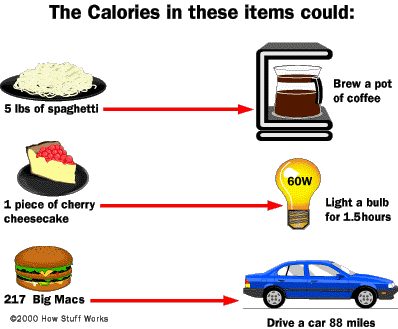
Let’s clear up the confusion right away. A calorie is a unit of energy. Not just for food. Think about a gallon of gasoline. It holds roughly 31 million calories. Specifically, it is the heat energy required to raise the temperature of 1 gram of water by 1 degree Celsius.
We usually think of calories when we look at a soda can. That label says 200 calories. But technically, that number is actually kilocalories. One kilocalorie equals 1,000 calories. Food labels drop the “kilo” for simplicity. So when you see 200 on the back of a package, you are looking at 200,000 actual scientific calories. A gallon of gas? That’s 31,000 kilocalories.
This applies to exercise too. If your fitness tracker says you burned 100 calories jogging a mile, it means 100 kilocalories. We will stick to this convention. When we say calorie here, we mean kilocalorie.
How Your Body Burns Fuel
You need energy to exist. To breathe. To pump blood. You get that energy from food.
The calorie count on a package tells you how much potential energy is locked inside. Carbohydrates provide 4 calories per gram. Protein also provides 4 calories per gram. Fat is denser. It provides 9 calories per gram. Food is just a mix of these three blocks. Know the macros, and you know the energy.
Take a packet of maple-and-brown-sugar oatmeal. The box says 160 calories. If you could burn that oatmeal completely in a dish, it would release enough heat to warm 160 kilograms of water by 1 degree Celsius. Look closer at the ingredients. Two grams of fat. Four grams of protein. 32 grams of carbohydrates. Do the math. 18 calories from fat. 16 from protein. 128 from carbs. That totals 162. The manufacturer rounded down to 160.
Your body doesn’t use fire. It uses enzymes. Metabolic processes break carbs into glucose. Fats split into glycerol and fatty acids. Proteins turn into amino acids. These molecules travel through your bloodstream. Your cells absorb them for immediate fuel or store them for later. They react with oxygen. Energy is released.
“The word ‘calorie’ is sometimes capitalized to show the difference, but usually not.”
Calculating Your Basal Metabolic Rate
How many calories does your body need? There is no single answer. You might see “2,000 calories” on nutrition labels. That is a rough average. It is not your number. Your height, weight, gender, age, and activity level change the equation.
Three factors determine your daily caloric need:
– Basal metabolic rate
– Physical activity
– Thermic effect of food
Basal metabolic rate (BMR) is the energy your body uses at rest. It accounts for 60 to 70 percent of the calories you burn in a day. This is the fuel for your heart beating, lungs breathing, kidneys filtering, and body heat stabilizing.
Men generally have a higher BMR than women. To estimate yours, use the Harris-Benedict formula. It is one of the most accurate methods.
For adult males:
66 + (6.3 x weight in lbs) + (12.9 x height in inches) – (6.8 x age in years)
For adult females:
655 + (4.3 x weight in lbs) + (4.7 x height in inches) – (4.7 x age in years)
Note the first number for women. It is 655. Not 655.0. Just 655. Strange, but true.
The Real Cost of Moving
You’ve got your BMR locked in. Now comes the part where you actually leave the couch. Physical activity is the second biggest drain on your energy reserves, sitting right behind your basal metabolic rate. We’re talking about everything from making your bed to sprinting for the bus. Walking. Lifting heavy things. Bending over to pick up a sock you dropped three days ago. It all adds up.
But here’s the catch: the more you weigh, the more energy it takes to move that mass. A 150-pound person burns fewer calories running a mile than a 200-pound person does. If you want the exact math for your specific weight, you need to look at activity charts. They exist. Use them. It’s not magic; it’s physics.
The Hidden Tax on Your Lunch
Then there’s the thermic effect of food. Sounds like a bureaucratic fee, right? It’s not. It’s the energy your body burns just to process what you ate. Digestion takes work. Breaking down proteins, fats, and carbs into usable fuel requires ATP. A rough rule of thumb? Your body burns about 10 percent of the calories you consume just to handle the meal.
Multiply your daily intake by 0.10. That’s the energy cost of eating itself.
Need to track what you’re actually putting in your mouth? Don’t guess. Use tools like the USDA National Nutrient Database or Mike’s Calorie and Fat Gram Chart. Guessing is how you end up with a surplus you didn’t see coming.
The Math of Fat Storage
So, what happens when the input doesn’t match the output?
If you eat more than you burn, the excess gets stored. If you eat less, you dip into reserves. The conversion rate is brutal in its simplicity: 3,500 extra calories equals one pound of body fat. Your body is hoarding energy for a famine that might never come.
Conversely, burn 3,500 more calories than you eat, and you lose a pound. You can do this by moving more. Or by eating less. Or by doing a little of both. The equation balances either way.
Exercise has a lingering effect, too. It’s not just the calories you torch while on the treadmill. Your metabolism stays elevated for about two hours after you stop. That’s the “afterburn” effect. Your body is still working overtime to cool down, repair tissues, and restore balance. Those extra burned calories matter. They add up over weeks.
Calories Are Equal. Nutrition Is Not.
Here’s where the internet arguments start. Does it matter where the calories come from?
Strictly for weight loss? No. A calorie from a protein bar is the same unit of energy as a calorie from a donut. If you burn 2,000 and eat 2,000, you stay the same weight. If you burn 2,000 and eat 1,500, you lose weight. Math is math.
But for health? It matters immensely. Carbs and proteins offer nutrients. Fats are necessary—you need them to absorb vitamins A, D, E, and K—but excess fat packs on weight fast and carries health risks. The FDA sets the limit at 30 percent of daily calories from fat. For a 2,000-calorie diet, that’s 600 calories, or roughly 67 grams.
Many nutritionists argue for 25 percent instead. 56 grams. The lower you go, the more careful you have to be with your sources.
The Shock of the Dense
We tend to underestimate how dense energy can be. Look at the numbers below. They don’t lie.
| Food | Serving Size | Calories | Fat Grams |
|---|---|---|---|
| Canola Oil | 1 cup | 1,674 | 218 |
| Peanut Butter | 1 cup | 1,520 | 129 |
| Cheddar Cheese | 1 cup | 531 | 44 |
| Granola | 1 cup | 270 | 8 |
| Chocolate Syrup | 1 cup | 837 | 3 |
| Sugar | 1 cup | 774 | 0 |
| Coca-Cola | 1 can | 140 | 0 |
One cup of canola oil? Nearly 1,700 calories. It’s pure fat. You could drink that and still fit into your pants if you didn’t eat anything else. But would you feel good? Probably not. You’d lack fiber, protein, and micronutrients. You’d just be full of empty energy.
Sugar and soda look harmless on the fat column—zero grams. But they pack a caloric punch without any satiety. You drink the calories, and an hour later, you’re hungry again. It’s a trap.
Understanding where your energy comes from changes how you eat. It’s not just about the number on the scale. It’s about what that number does to your body.