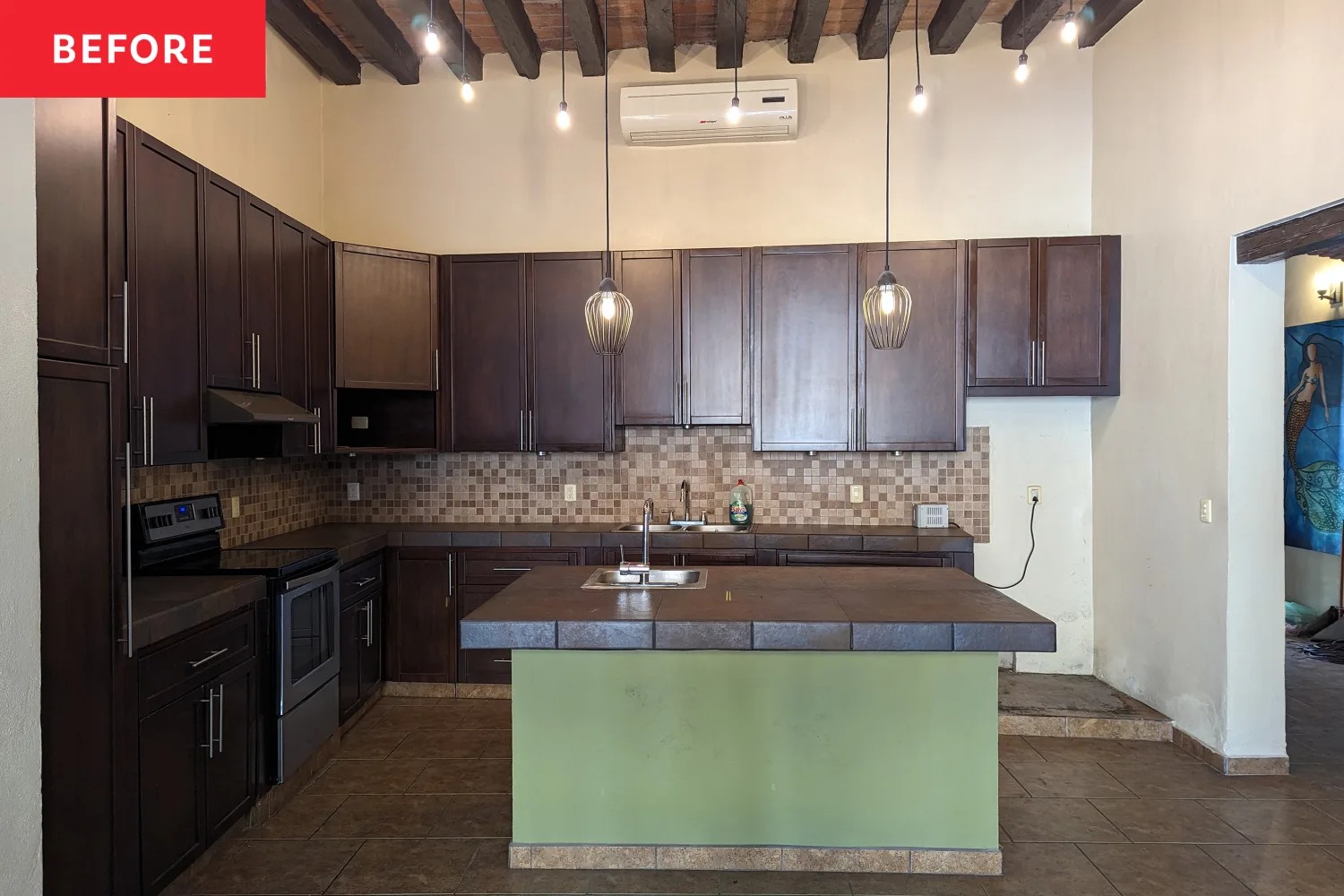
Kitchen renovations are often categorized into two camps: the labor-intensive DIY projects and the high-end professional overhauls. However, Sonia Blair’s recent kitchen remodel in Mazatlán, Mexico, represents a unique third category—a remote transformation managed entirely by professionals while the homeowner lived thousands of miles away in Colorado.
The Challenge: Breaking the “Boxy” Feel
The original kitchen was described by both the owner and the design team as “dark,” “dreary,” and “boxed in.” Typical of many older layouts, the space felt heavy and enclosed, lacking the natural flow required for a modern, inviting home.
Blair’s objective was clear: she wanted to breathe life into the space without an exorbitant budget. Her strategy focused on repurposing existing materials and altering the visual weight of the room through three specific design choices:
– Open shelving to reduce visual clutter.
– Glass cabinet inserts to break up the solid mass of the cabinetry.
– A strict color palette that completely banished the use of brown.
The Design Strategy: Color as a Catalyst
Working remotely presented a unique hurdle for Blair, who had to rely entirely on the expertise of 35 Agave Co., a remodeling duo led by Sophia Boccard and Socrates Figueroa. Because Blair could not be on-site to oversee the daily progress, the designers took on the role of both executors and creative consultants.
The most significant leap in the project was the decision to embrace bold color. While many homeowners opt for safe neutrals to maintain resale value, Boccard encouraged Blair to take a risk. The result was a striking use of Behr’s “Midnight In The Tropics” on the cabinetry.
Key Design Elements:
- Cabinetry: A deep, vibrant teal that provides a high-contrast pop against cream-colored walls.
- Flooring: To satisfy the “no brown” rule, the team used micro-cement to create a sleek, polished concrete look.
- Surfaces: New tiles, countertops, and an island were installed to complement the new color scheme and modernize the aesthetic.
Why This Matters: The Power of “Low-Impact” Remodeling
This project serves as a case study in how targeted aesthetic changes can yield massive psychological shifts in a living space. By focusing on paint, hardware, and light-reflecting surfaces (like glass and polished concrete) rather than structural demolition, the team achieved a “total makeover” feel while remaining budget-conscious.
This approach highlights a growing trend in interior design: moving away from “safe” beige palettes toward expressive, personality-driven colors that define a home’s character.
“I love everything about the kitchen,” Blair says. “I especially love that from another country, 35 Agave Co. and I were able to make all my dreams come true.”
Conclusion
Through strategic color choices and smart material repurposing, this renovation transformed a cramped, dark kitchen into an airy, tropical retreat. It proves that even a remote, budget-conscious remodel can achieve high-impact results through bold design decisions.