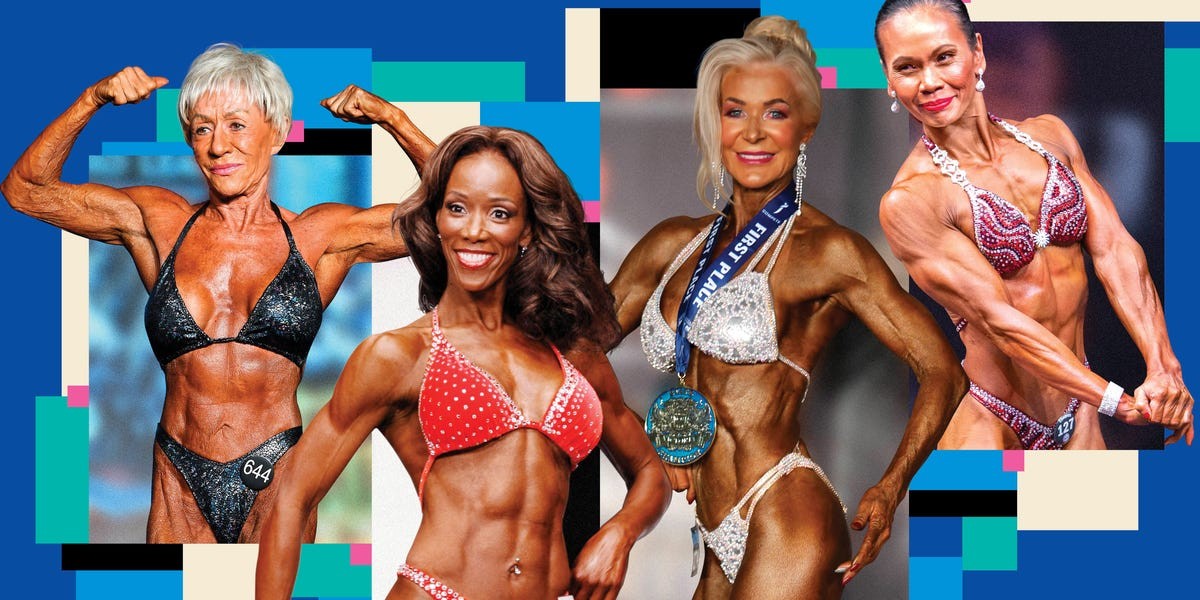
For decades, cultural narratives surrounding women over 50 have often focused on “slowing down” or fading into the background. However, a powerful shift is occurring in gyms and on competitive stages worldwide. A growing generation of mature women is rejecting the idea that aging requires physical decline, choosing instead to build muscle, compete in bodybuilding, and redefine what it means to age with vitality.
A Cultural Shift from Thinness to Strength
Historically, Western beauty standards for women have prioritized thinness. Today, that paradigm is shifting toward muscularity and functional strength.
According to Dr. Natalia Mehlman Petrzela, author of Fit Nation, women in their 50s and 60s are the first generation to actively challenge the stereotype that their bodies are no longer “worth attention” after their childbearing years. This movement isn’t just about aesthetics; it is a reclamation of agency.
Marjorie Thrash, Director of Operations for the Organization of Competitive Bodybuilding (OCB), notes a significant surge in women over 50 entering competitions. For many, these contests—ranging from “figure” (focused on symmetry) to “bodybuilding” (focused on maximum muscle)—represent a long-overdue investment in their own health and self-improvement.
Profiles in Resilience: Why They Lift
The motivations behind these athletes vary, but they all share a common thread of using physical strength to build mental fortitude.
1. Overcoming Grief through Movement
Iris Davis (82) proves that physical training can be a lifeline for mental health. Having faced profound personal tragedies—including the loss of her infant son and her husband—Davis turned to the gym to combat debilitating depression.
– The Journey: Starting in a gritty 1960s gym, she transitioned from walking for solace to competitive bodybuilding in her 50s.
– The Legacy: A former Guinness World Record holder and recipient of a Pioneer Award, Davis now runs her own gym, training athletes from age 16 to 80+.
2. The Physician as a Role Model
Dr. Marianne Dait uses her medical expertise to bridge the gap between clinical knowledge and physical practice.
– The Transformation: Approaching 50, she transitioned from a “soft” physique to a sculpted, six-pack aesthetic through rigorous discipline.
– The Mission: As a family practice physician, she uses her own body as a living example for patients, demonstrating that sedentary lifestyles are not an inevitability of age. She emphasizes that through “smart training,” age is never a limiting factor.
3. Reclaiming Ownership of the Self
Wendy Ida (73) views her muscularity as a symbol of survival. After escaping an abusive relationship and navigating a period of significant weight gain, she found empowerment through weightlifting.
– The Breakthrough: At 43, she realized that lifting weights allowed her to finally “own” her body.
– The Result: She has since won multiple titles, including categories competing against women much younger than herself, proving that physical strength can mirror inner fortitude.
4. Defying Fragility
Lesley Maxwell, a personal trainer in her 60s, treats fitness as a non-negotiable pillar of her mental stability. After a health crisis at age 49, she discovered bodybuilding and has since secured over 30 titles. She views her strict regimen not as a sacrifice, but as a necessary practice for maintaining her identity and resisting the “fragility” often expected of older adults.
The Science of Longevity: Why Muscle Matters
The dedication of these women is backed by physiological reality. Muscle is not merely a cosmetic asset; it is a critical component of survival as we age.
“The better your muscle quality, the greater your survivability,” notes Dr. Gabrielle Lyon, founder of the Institute for Muscle-Centric Medicine.
Key benefits of resistance training for older adults include:
* Improved Bone Density: Strength training helps combat osteoporosis.
* Enhanced Balance and Mobility: Building a muscular foundation reduces the risk of falls.
* Increased Longevity: Research suggests that high muscle strength in later life is a primary indicator of reaching age 100.
* Metabolic Health: Even in their 70s and 80s, adults can see significant increases in muscle size and strength with as little as 12 weeks of consistent resistance training.
Conclusion
The rise of mature female bodybuilders represents a profound rejection of ageist stereotypes. By prioritizing strength and discipline, these women are demonstrating that physical vitality is not a finite resource tied to youth, but a lifelong pursuit that enhances both mental resilience and physical longevity.