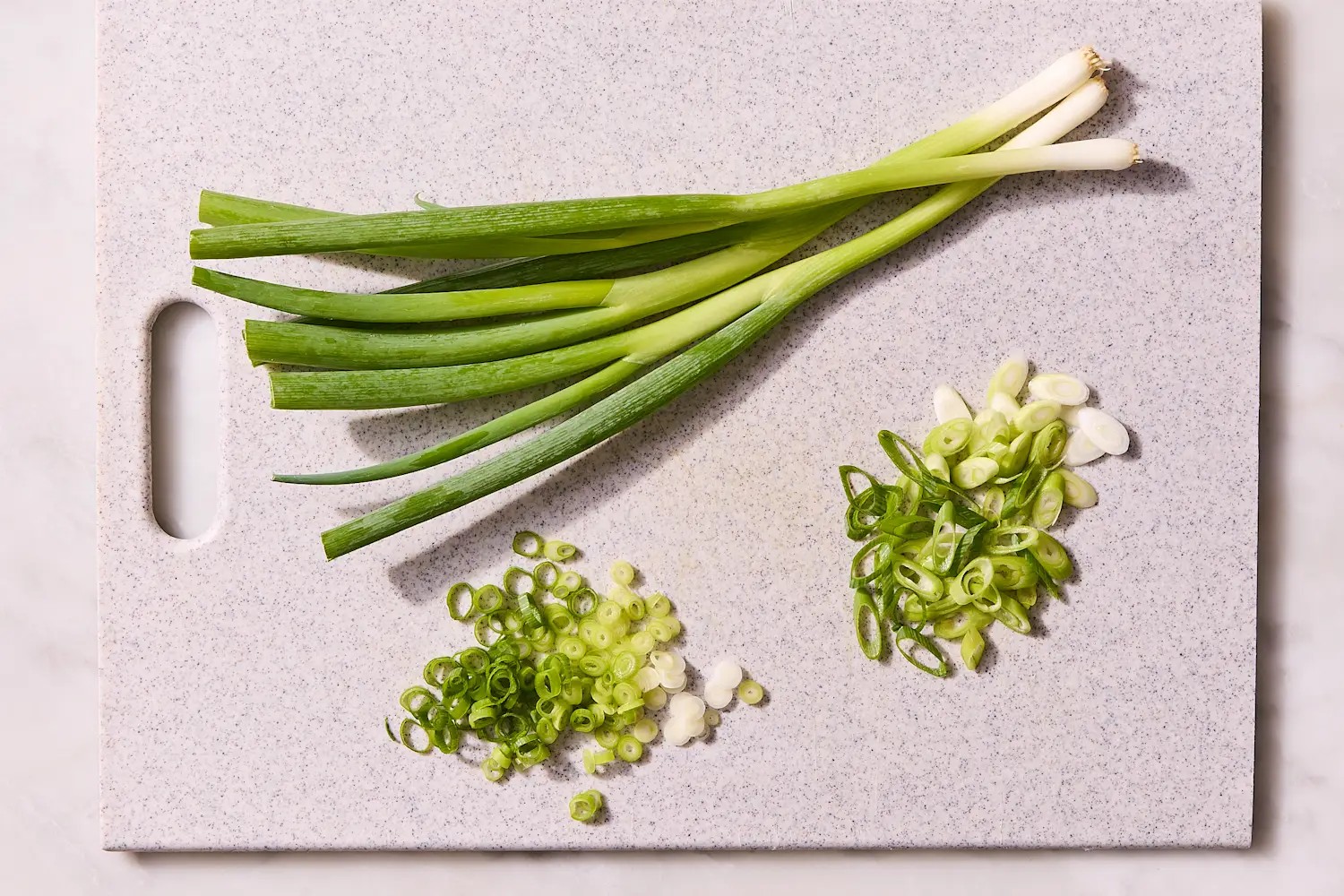
Green onions (often called scallions) are a staple in kitchens worldwide, offering a versatile flavor profile that ranges from mild to pungent. Because they are used both as a base ingredient and a delicate garnish, knowing how to handle them correctly is essential for both culinary results and food safety.
Identifying the Right Produce
Not all “green” onions are created equal. Before you begin cooking, it is important to distinguish between three common varieties that are often confused:
- Chives: These have very thin stems and offer a delicate, subtle onion flavor.
- Green Onions (Scallions): These feature thicker stems and a small white bulb at the base, providing a more pronounced flavor.
- Spring Onions: Similar to green onions but characterized by a much larger white bulb and a significantly stronger, sharper taste.
Pro Tip: When shopping, look for stems that are bright green and firm. Avoid any bunches that feel soft, slimy, or wilted, as these are signs of decay.
Step 1: Cleaning and Prepping
Regardless of the cutting style you choose, the preparation process remains the same. Proper cleaning ensures you remove dirt and grit that often hides in the layers of the bulb.
- Rinse: Wash the onions thoroughly under cold running water. Use your fingers or a paper towel to scrub away any residual soil.
- Peel: If the outermost layer of the bulb or stem appears bruised or wilted, gently peel it away to reveal the fresh layers underneath.
- Trim: Using a sharp knife, trim approximately a quarter-inch off the very top of the green stem and cut away the root ends at the base of the bulb.
Note: Both the white bulb and the green stems are entirely edible, making this a zero-waste ingredient if handled properly.
Step 2: Three Essential Cutting Techniques
The way you cut your green onions can change the texture of your dish and its visual appeal.
1. The Classic Crosswise Cut (Rings)
This is the most common method for adding texture to soups, omelets, or stir-fries.
* Lay the stems horizontally on a cutting board.
* Using the heel of a sharp chef’s knife, slice vertically through the onions to create uniform rings.
* You can adjust the thickness of the rings based on whether you want a crunch or a subtle flavor.
2. The Bias Cut (Diagonal)
If you want your dish to look professional and aesthetically pleasing, use the bias cut.
* Lay the stems horizontally.
* Instead of cutting straight down, hold your knife at a 45-degree angle.
* Slice diagonally from the bulb toward the stem to create elegant, elongated rings.
3. Thin Strips (Julienne)
This technique is ideal for delicate garnishes, such as those found on top of ramen or poke bowls.
* Lay the stems diagonally on the board.
* Use your knuckles as a guide to stabilize the onion.
* Make very thin, vertical slices. Handle these with care, as the resulting strips are quite delicate.
Step 3: Maximizing Freshness through Storage
To prevent waste, use these two methods depending on whether your onions are whole or already sliced:
- For Whole Onions (The “Bouquet Method”): Place the onions root-end down in a jar with a few inches of water. Cover the tops with a plastic bag and store them in the refrigerator. This keeps them crisp for approximately one week.
- For Sliced Onions: Once cut, green onions lose moisture quickly. Use them immediately if possible. If you must store them, place them in an airtight container in the fridge, but consume them within two days.
Summary: By selecting firm produce, mastering specific knife angles, and using the “bouquet method” for storage, you can ensure your green onions remain a fresh, flavorful addition to your cooking.