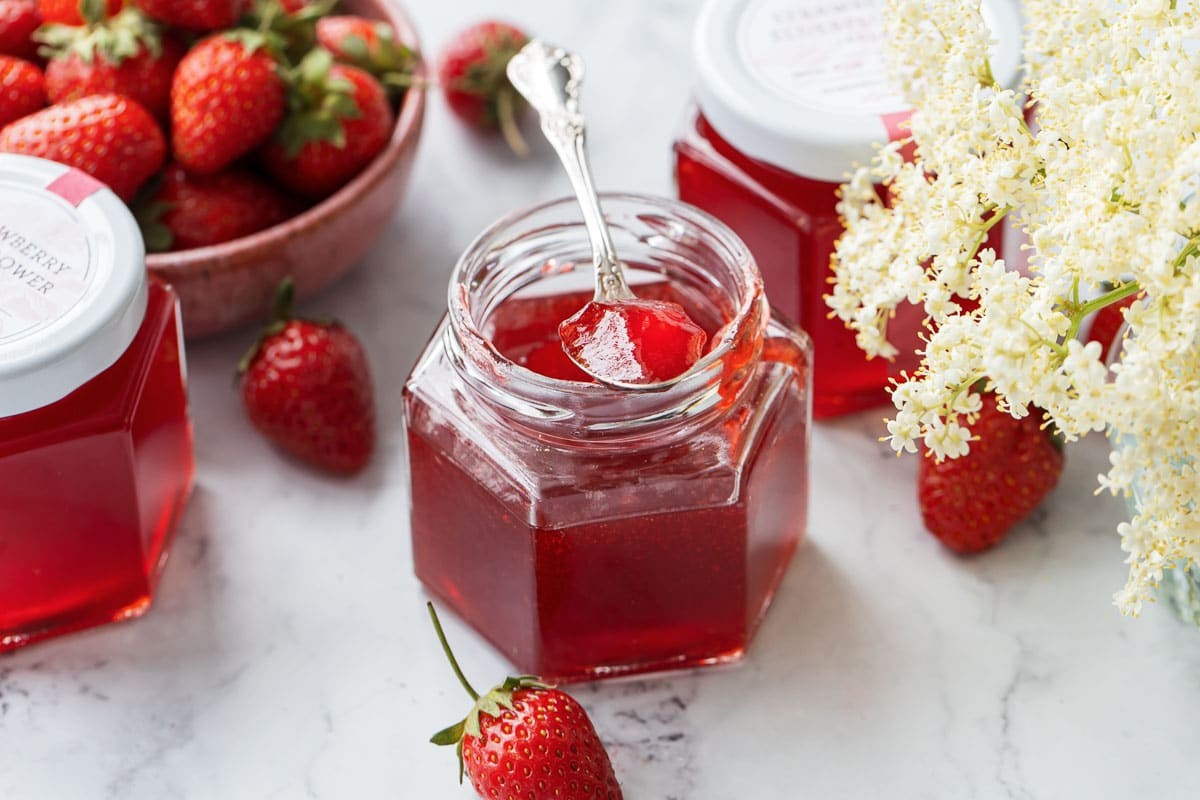
There is a distinct moment in late spring when strawberries reach their peak ripeness, offering not just sweetness but subtle, complex floral notes. This recipe captures that fleeting season by infusing a classic strawberry jelly with elderflower syrup. The result is a ruby-red, crystalline preserve that tastes less like a standard jam and more like the essence of spring itself.
This small-batch recipe is designed for flexibility. You can water-bath can it for year-round storage, refrigerate it for immediate use, or freeze it for later. It also includes a variation using dried rose petals, allowing you to tailor the floral profile to your preference.
Why Jelly Instead of Jam?
For those accustomed to strawberry jam, the distinction lies in texture and technique. Jam is made from crushed whole fruit, resulting in a textured spread with visible pieces of berry. Jelly, by contrast, is made from strained fruit juice, yielding a smooth, clear, and firm set.
If you prefer a uniform texture without the bite of fruit pulp, jelly is the superior choice. This recipe leverages that clarity to highlight the delicate interplay between the berry’s acidity and the flower’s aroma.
Key Technique: To achieve maximum flavor extraction, do not steep flowers directly in the fruit mash. Instead, create a flower-infused simple syrup first. Steeping flowers in sugar water for at least 24 hours pulls out the essential oils far more effectively than brief contact with hot fruit juice.
The Science of Infusion: Syrup First
The secret to a potent floral flavor lies in the syrup preparation. Directly adding fresh flowers to boiling strawberry juice often results in a muted taste because the high heat and short steeping time don’t allow for proper extraction.
The Recommended Method:
1. Create Simple Syrup: Combine equal parts water and sugar (by weight) and bring to a simmer.
2. Infuse: Add your flowers (elderflower or rose) to the warm syrup.
3. Steep: Let the mixture sit for at least 24 hours. This extended time allows the floral compounds to dissolve fully into the sugar solution.
4. Strain & Combine: Strain out the flowers and add the infused syrup to your strawberry jelly base.
Note: If you have leftover syrup, save it. It makes an excellent substitute for simple syrup in cocktails or mixed with sparkling water for a refreshing spritzer.
Achieving Crystal Clarity
A hallmark of professional-grade jelly is its transparency. To achieve this “stained glass” appearance:
- Use a Jelly Bag or Cheesecloth: Strain the mashed strawberries through a jelly bag or a double layer of cheesecloth set in a sieve.
- Do Not Press: Allow the juice to drip through naturally. Pressing or squeezing the pulp will force fine particles into the juice, causing cloudiness.
- Patience Pays Off: This process may take several hours or overnight. You will lose some yield, so consider using an extra 3–4 ounces of strawberries to ensure you have enough juice.
If you prefer a faster process and don’t mind a slightly less transparent result, you can press the fruit through a standard sieve. The flavor will remain rich, even if the visual clarity is slightly compromised.
Ingredient Variations: Elderflower vs. Rose
While this recipe highlights elderflower, the technique applies to any edible flower.
- Elderflower: Offers a sweet, grape-like aroma. Use about 8 tablespoons of infused syrup per batch.
- Rose Petals: Provide a perfumed, romantic note. Use about 6 tablespoons of infused syrup. Be cautious with rose water additives; a quarter to half a teaspoon is sufficient. Too much can result in an unpleasant, potpourri-like taste.
- Other Flowers: Lavender, chamomile, or hibiscus can be used. However, lavender is potent; use sparingly to avoid overwhelming the strawberry flavor.
Safety Note: Always use culinary-grade flowers. Fresh flowers must be organic and unsprayed. Flowers from florists or grocery stores are often treated with pesticides and are not safe for consumption.
Pectin and Sugar Ratios
Strawberries are naturally low in pectin, requiring an added source to set properly. This recipe is calibrated for Ball Classic Pectin, which offers flexibility in sugar reduction.
Important Adjustments for Other Pectins:
* Sure-Jell (Yellow Box): This pectin requires specific sugar ratios to set. Do not reduce the granulated sugar. Ensure you use at least 6 tablespoons of floral syrup, or increase granulated sugar to 1 ¼ cups. Reducing sugar with this pectin will result in a runny syrup rather than a set jelly.
* Liquid or Low-Sugar Pectins: Follow the package instructions strictly for strawberry jelly. Add your floral syrup as part of the sweetener component.
Scaling and Storage
This is a small-batch recipe, using just over a pound of strawberries to yield approximately three 4-ounce jars. It is ideal for beginners or those who prefer fresh preserves without a large inventory.
Storage Options:
1. Water-Bath Canning: Process jars for shelf-stable storage for up to 1 year. Once opened, refrigerate and consume within 2 weeks.
2. Refrigeration: Skip the canning step and store in the fridge for up to 2 weeks.
3. Freezing: Store in freezer-safe containers (leave headspace for expansion) for up to 3 months.
Final Thoughts
Strawberry Elderflower Jelly transforms a seasonal abundance into a sophisticated preserve that bridges the gap between rustic farm produce and refined culinary art. By mastering the syrup infusion and straining techniques, you can create a jewel-toned spread that elevates toast, cheese boards, and desserts alike.
Pro Tip: Don’t discard the leftover strawberry pulp! Blend it into smoothies, swirl it into yogurt, or bake it into fruit leather at 170°F (77°C) for 1–2 hours to reduce waste and enjoy every part of the berry.