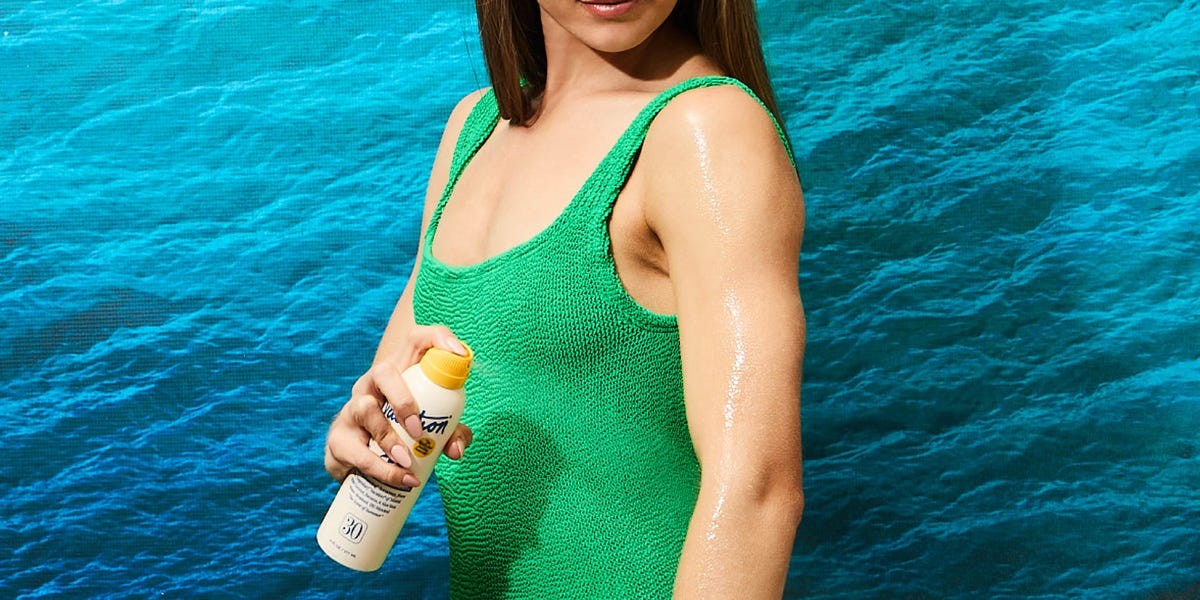
Sun protection is often a chore. Many traditional lotions feel heavy, leave a chalky white cast on deeper skin tones, or trigger skin sensitivities like eczema. This is why spray sunscreens have become an essential tool in modern skincare routines. They offer a lightweight, fast-absorbing alternative that makes covering hard-to-reach areas—like your back—effortless.
Dermatologists emphasize that sprays are most effective when used as a supplement to lotions or for quick touch-ups throughout the day. To ensure full coverage, experts recommend spraying until a visible, even sheen appears on the skin.
Understanding the Science: How Sprays Protect You
Despite their light texture, spray sunscreens are just as powerful as creams. They utilize two primary types of active ingredients to defend against UVA rays (which cause premature aging) and UVB rays (which cause sunburns):
1. Mineral Filters (Physical Blockers)
Look for zinc oxide or titanium dioxide. These ingredients sit on the surface of your skin and act as a physical shield, reflecting UV radiation away from the body. Zinc oxide is particularly favored for its ability to create a nearly invisible barrier.
2. Chemical Filters (Absorbers)
Ingredients such as avobenzone, octisalate, and oxybenzone work differently. They absorb into the skin and convert UV radiation into heat, which is then released from the body. These formulas are often preferred by those seeking a “no-residue” feel.
Essential Buying Criteria
When navigating the crowded market of sun protection, focus on these four critical factors to ensure you are getting genuine protection:
- Broad-Spectrum Labeling: This is non-negotiable. It guarantees the product protects against both UVA and UVB rays, reducing the risk of both skin cancer and wrinkles.
- SPF (Sun Protection Factor): While higher numbers offer more protection, the jump from SPF 30 (97% protection) to SPF 50 (98% protection) is incremental. Experts recommend a minimum of SPF 30. The most important factor isn’t the number, but the consistency of application.
- Water Resistance: No sunscreen is “waterproof.” Look for “water-resistant” labels, which indicate how long the product remains active during swimming or sweating.
- Reapplication Timing: Chemical sunscreens lose efficacy as they react with light, while mineral sunscreens can clump with sweat and oil. Reapply every two hours, especially after swimming or towel-drying.
Pro Tip: For extra skin benefits, look for formulas enriched with hyaluronic acid for hydration or niacinamide and Vitamins C & E to fight free radical damage caused by aging.
Expert-Tested Recommendations
After two years of rigorous testing—evaluating everything from drugstore staples to premium Australian imports—the following categories represent the best value and performance in the current market. Our selection process prioritized efficacy, skin comfort (avoiding “ashy” finishes), and affordability, with all picks starting at just $10.
- Best Overall: The top-performing formula for daily use, balancing ease of application with high-level protection.
- Best Budget: An unbeatable value that offers SPF 50 broad-spectrum coverage without a white cast.
- Amazon Best Seller: A reliable, high-volume favorite for quick, easy protection.
- The Reader Favorite: A crowd-pleaser known for its skin-friendly finish.
- Best Smelling: Ideal for those who find traditional sunscreens unpleasant to wear.
- Specialty Picks: Includes options for hairline protection (for those avoiding hats) and glowy formulas perfect for summer events and festivals.
Conclusion
The most effective sunscreen is ultimately the one you will actually use and reapply. By choosing a spray formula that fits your skin type and lifestyle, you ensure consistent protection against skin cancer and premature aging.