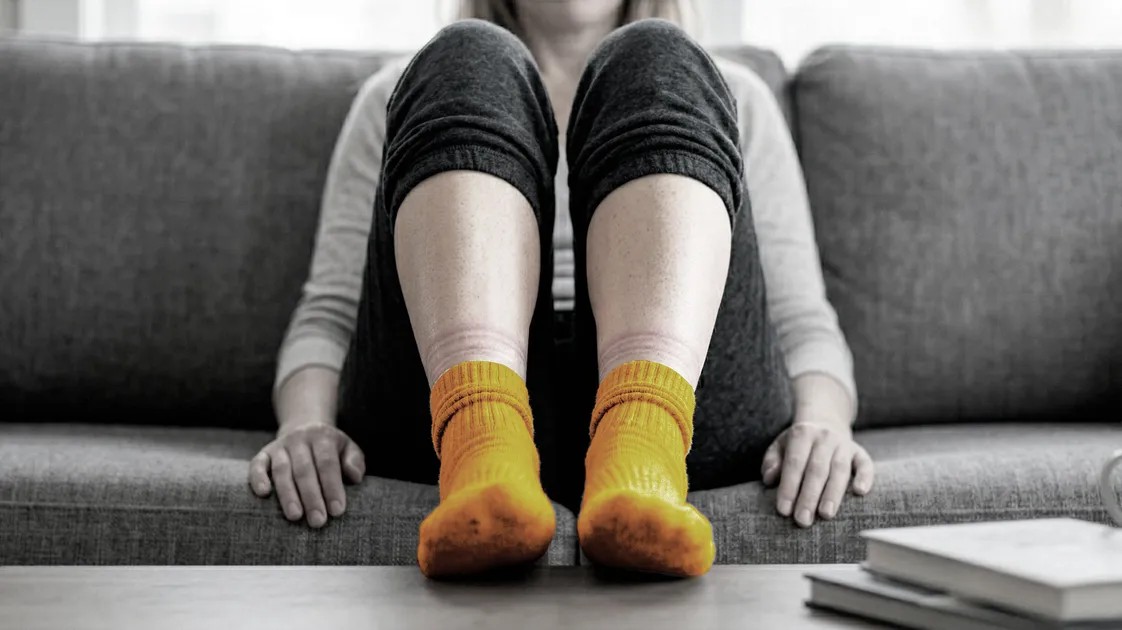
Most of us have experienced that moment of pulling off our socks at the end of the day, only to find deep, visible indentations left behind on our ankles or calves. While these marks are often dismissed as a mere nuisance, medical professionals suggest they can serve as a subtle signal from your body regarding your circulation, hydration, and overall vascular health.
Why Do Sock Marks Happen?
In many cases, sock lines are a normal physiological response to daily habits rather than a sign of disease. Doctors point to several common, non-threatening causes:
- Lifestyle and Posture: If you spend your day sitting in a sedentary job or standing for long shifts, gravity causes blood to pool in your lower extremities. This “dependent position” makes fluid settle in the legs, leading to mild swelling.
- Dietary Choices: Consuming high amounts of sodium (salt) can cause the body to retain water, resulting in temporary swelling in the legs and fingers.
- Dehydration: Paradoxically, not drinking enough water can cause the body to struggle with fluid regulation, leading to swelling and prominent sock marks.
- Poor Fit: Sometimes, the simplest explanation is the correct one: your socks may simply be too tight.
When to Pay Attention: The Red Flags
While occasional indentations are common, certain patterns suggest that the underlying cause might require medical intervention. You should consult a healthcare professional if you notice any of the following:
1. Asymmetry
The human body tends toward symmetry. If sock marks appear only on one leg, or if one leg is significantly more swollen than the other, it is a sign that something is “off” and warrants an evaluation.
2. Accompanying Physical Symptoms
Watch for these specific indicators that your veins may be struggling:
– Hyperpigmentation: Darkening of the skin near the ankles.
– Varicose Veins: Visible, swollen, or twisted veins.
– Leg Fatigue: A heavy, aching sensation in the legs that improves only when you elevate them.
– Persistent Swelling: Edema that remains visible even when you are not wearing socks.
3. Progressive Worsening
If the indentations become deeper, last longer, or appear more frequently over weeks and months, it could indicate more serious systemic issues, such as kidney disease or heart failure. In cases of heart failure, these marks may be accompanied by shortness of breath or difficulty breathing while lying flat.
Note on Blood Clots: It is important to distinguish between swelling and a blood clot. A clot typically presents with intense pain, redness, and significant localized swelling in the calf or leg, rather than just simple sock indentations.
Proactive Management and Prevention
If your marks are caused by lifestyle factors rather than underlying illness, there are several ways to manage them:
- Elevation: Periodically raising your legs above the level of your heart helps gravity move fluid back toward your torso.
- Compression Socks: For those who stand or sit for long periods (such as healthcare workers or frequent travelers), compression socks can help prevent fluid from settling in the ankles, reducing heaviness and fatigue.
- Lifestyle Adjustments: Prioritizing regular exercise and maintaining a balanced, low-sodium diet can significantly reduce fluid retention.
Conclusion: While sock marks are often a harmless byproduct of a long day, they act as a useful diagnostic “check-in.” If the marks are asymmetrical, worsening, or accompanied by pain and shortness of breath, seek medical advice to rule out more serious cardiovascular or renal conditions.